


Table of Contents
A pristine swimming pool is the centerpiece of any backyard oasis, a shimmering haven of relaxation and fun. But over time, even the most well-cared-for pool can lose its luster. From stubborn algae blooms to cloudy water and scaling, a range of issues can turn your aquatic paradise into a frustrating chore. Restoring a pool to its former glory—and more importantly, maintaining that brilliance—requires a blend of consistent effort, a deep understanding of water chemistry, and the right tools and techniques. This comprehensive guide will provide the expert advice you need to not only bring your pool back to a pristine state but to keep it there for good.
The First Step to Restoration: The Pool Condition Assessment
Before you can begin to restore your pool, you must first understand the root cause of its current state. A thorough assessment is the foundation of any successful swimming pool restoration. This process involves more than just a quick glance; it’s a detailed inspection of the pool’s structure, equipment, and water quality.
- Structural Integrity: Carefully inspect the pool’s surface for any cracks, fissures, or peeling. For plaster or gunite pools, look for hairline cracks, which can be a sign of deeper structural issues. For vinyl liner pools, check for tears or wrinkles. These problems can lead to leaks, which not only waste water but can also cause significant damage to the surrounding deck and foundation.
- Equipment Functionality: Your pool’s equipment—the pump, filter, and heater—is its lifeblood. Check for unusual noises from the pump, which could indicate a failing motor or a clogged impeller. Inspect the pressure gauge on your filter; a high reading means the filter needs cleaning or backwashing. For salt-chlorine generators, check for scale buildup on the cell, which can drastically reduce its efficiency.
- Water Quality Diagnostics: This is where you put your chemistry knowledge to the test. A test kit is essential for diagnosing the problem. Test for pH, Total Alkalinity, Calcium Hardness, and Cyanuric Acid (CYA). Cloudy or green water often points to a severe imbalance, typically low chlorine, high pH, or high phosphates. Understanding these levels is crucial because you must correct the underlying chemical imbalance before any physical cleaning will be effective.
Phase One: The Restoration Process
Once you’ve identified the problems, it’s time for action. A swimming pool restoration is often a multi-step process that can range from a simple deep clean to a full-scale renovation.
Draining and Deep Cleaning the Pool
For pools with severe algae, heavy staining, or a thick layer of sediment, a full drain may be the most effective solution. This is a critical step that should be handled with care to avoid damage to the pool’s structure.
- Safe Water Removal: Never drain a pool in a hurry. Rapid draining can cause a phenomenon known as “pool pop,” where the hydrostatic pressure from groundwater can push the empty pool shell out of the ground. Professionals use submersible pumps to slowly and safely remove the water, ensuring the surrounding pressure remains stable.
- Acid Washing for Stubborn Stains: Once the pool is empty, you can get to work on the stains. An acid wash is a powerful technique for removing years of accumulated stains and mineral deposits from plaster or gunite surfaces. This process involves a controlled application of a diluted acid solution that strips a thin layer of the surface to reveal the fresh, clean layer underneath. This is a job best left to experts, as handling muriatic acid requires specialized knowledge and safety precautions.
- Pressure Washing and Surface Prep: For pools that don’t require an acid wash, a thorough pressure wash of the walls and floor is the best way to remove dirt, grime, and any remaining algae. Proper surface preparation is vital before any resurfacing or patching takes place.
Resurfacing and Repairing the Pool
If your pool’s surface is rough, stained beyond cleaning, or showing signs of delamination, resurfacing is the logical next step in pool maintenance service.
- Plaster: A traditional and cost-effective choice, plaster provides a classic white or colored finish. It’s porous, which means it requires consistent maintenance to prevent staining and algae growth, but it’s a time-tested option.
- Pebble: This material combines a cement-based mix with tiny, smooth river pebbles. Pebble finishes are highly durable, resistant to stains, and offer a natural, textured look. They are more expensive than plaster but have a significantly longer lifespan.
- Quartz: A mix of cement and colored quartz aggregates, a quartz finish provides a beautiful and durable surface that is more stain-resistant than traditional plaster. It’s a popular middle-of-the-road option for those who want a long-lasting, vibrant finish.
- Fiberglass: For pools with concrete or gunite shells, a fiberglass coating can provide a non-porous, algae-resistant, and low-maintenance surface. It’s an excellent choice for a smooth, consistent finish.
Phase Two: Mastering Ongoing Maintenance
Once your pool has been restored to its former glory, the real challenge begins: maintaining that pristine condition. The secret lies in a consistent, proactive maintenance schedule that focuses on the three pillars of pool care: Circulation, Cleaning, and Chemistry.
Advanced Water Circulation Techniques
While a basic pump and filter are a good start, true experts know how to optimize their system for maximum efficiency.
- Variable-Speed Pumps: Upgrading to a variable-speed pump is one of the best investments you can make. These pumps can be programmed to run at lower speeds for longer durations, which saves energy and improves filtration. A slower flow rate allows the filter to capture smaller particles, leading to much clearer water. You can program it to run at a high speed for a few hours after heavy use or shocking the pool, and then drop it back to a low, energy-saving speed for the rest of the day.
- Proper Jet and Skimmer Placement: Ensure your return jets are positioned to create a “vortex” effect, pushing water around the pool in a circular motion. This prevents stagnant spots where algae can grow and helps all the water get to the skimmers and main drain for filtration. Clean your skimmer and pump baskets weekly to ensure unobstructed water flow.
The Nuances of Physical Cleaning
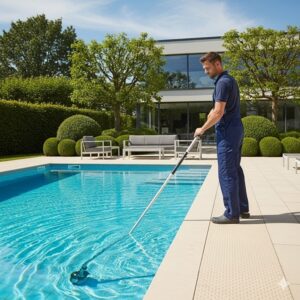
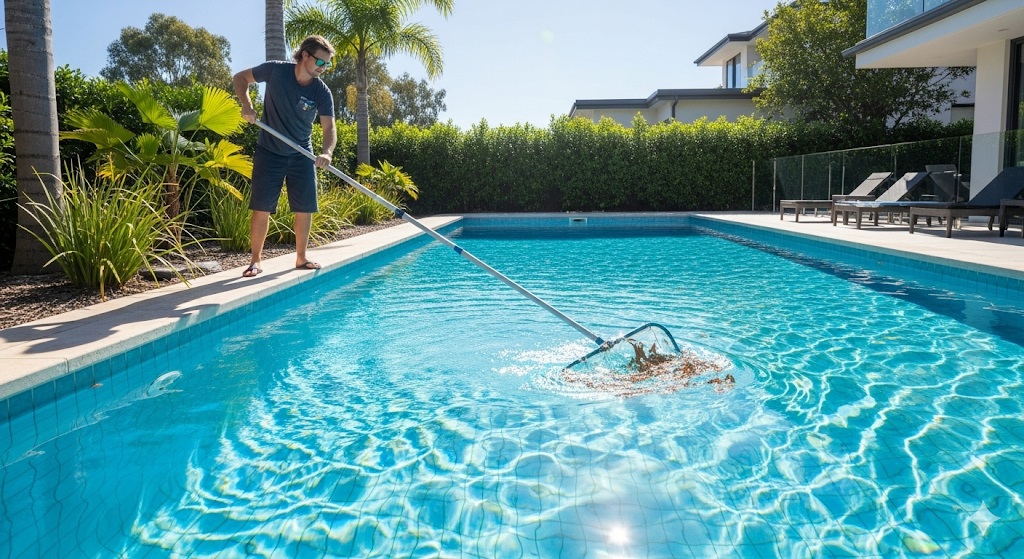
Regular skimming, brushing, and vacuuming are non-negotiable for a pristine swimming pool, but there are some expert-level tips that make a difference.
- Brushing Strategy: Don’t just brush the walls; focus on the “dead spots” where water doesn’t circulate well, such as behind the ladder, in corners, and on steps. These are the prime locations for algae to start. For concrete pools, use a stiff brush to scuff the surface and prevent algae from taking hold.
- Vacuuming “To Waste”: For pools with sand or DE filters, a manual vacuum can be set to “vacuum to waste.” This bypasses the filter, sending all the sucked-up debris directly out of the pool. This is incredibly useful for removing large amounts of dirt, dead algae, or heavy sediment that would otherwise clog the filter and make your pressure skyrocket.
- Robotic Cleaners: Investing in a high-quality robotic cleaner is a game-changer. These intelligent devices have their own filtration system and can be programmed to meticulously clean the floor, walls, and even the waterline, freeing up your time for other maintenance tasks.
The Chemistry of Flawless Water
This is arguably the most complex and important part of maintaining a pristine swimming pool. Small errors here can lead to big problems.
- Mastering the “Big Five”: You must consistently monitor and balance the five key chemical parameters:
- Free Chlorine (FC): The active sanitizer. Maintain a level of 1.0 – 3.0 ppm.
- pH: The measure of acidity/alkalinity. Keep it between 7.4 – 7.6 for swimmer comfort and chlorine effectiveness.
- Total Alkalinity (TA): The pH buffer. The ideal range is 80 – 120 ppm.
- Calcium Hardness (CH): Prevents corrosion of pool surfaces. A range of 200 – 400 ppm is ideal.
- Cyanuric Acid (CYA): The chlorine stabilizer that protects it from the sun’s UV rays. Aim for 30 – 50 ppm. Too much CYA can “lock up” your chlorine, making it ineffective.
- Pool Shocking Strategy: Shocking your pool is a necessary ritual to destroy bacteria and chloramines. For best results, shock at dusk or night to prevent the sun from burning off the chlorine. Use a quality test kit the next morning to ensure the FC level has returned to a safe range before swimming. A good practice is to shock weekly, especially during high usage periods, to maintain a clean and healthy swimming environment.
- Phosphate Management: Phosphates are a food source for algae. While many pool chemicals are loaded with them, you can test for phosphates and use a phosphate remover to keep their levels low. This will make it much more difficult for algae to grow, even if your chlorine level dips.
Advanced Troubleshooting and Professional Intervention
Even with the best practices, problems can arise. Here’s how experts handle them:
- Cloudy Water: This is often a sign of an imbalance. Check your pH, TA, and FC levels. If they are all in range, your filter might be the problem. A dirty or clogged filter is ineffective at removing particles. Consider adding a water clarifier or flocculant to help small particles clump together so your filter can catch them.
- Algae Blooms: If a green or yellow-green film appears, you have an algae problem. Manually clean the pool with a brush, use a high-dose shock treatment, and run your pump continuously for 24-48 hours. If the problem persists, you may need a specialized algaecide and a deep filter cleaning.
- When to Call a Pro: Some issues are beyond the scope of a DIY fix. A severe leak, a complete equipment failure, or a persistent chemical imbalance are all valid reasons to call a professional swimming pool service. They have the tools, chemicals, and expertise to diagnose complex problems and get your pool back in working order safely and efficiently.
By following this expert advice on swimming pool restoration and maintenance, you will not only be able to revive a neglected pool but also to confidently manage it for years to come. A well-maintained pool is a source of joy and pride, and with the right approach, you can ensure your aquatic sanctuary is always in perfect condition.